
Should you learn to vibe code?
Vibe coding 101—and why everyone is telling you to code right now

Back in the analog days, there was a clear line between creatives and whatever they were doing down there in the IT department. Writers wrote. Engineers engineered. Journalists journaled (jk). Then computers and the internet came along and people who knew how to code started telling people who didn’t that they should really get on it, because soon their jobs would be on the line and the media industry as we know it would be dead.
Flash forward 20+ years later, and the media industry as we know it has died and resurrected itself many times over. The industry is dying (again), so naturally people on the internet are resurrecting the classic meme used to taunt people who dared to work in a creative profession in the first place: learn to code, bro.
Why the “learn to code” advice isn’t going away in the age of AI
Telling people who have lost their jobs in yet another round of forever layoffs that they should learn to code isn’t a new phenomena, but seems more prevalent in the age of AI.
For the past few years, tech companies, especially those with a heavy investment in AI, have been telling every news reporter who still has a job that without a doubt, AI is on track to not only replace every job in every industry, but also replicate jobs on its own that we dumb humans haven’t even considered yet. In the very near future, these AI overlords boast, no one will have a job—we’ll have “concepts of a job”, in which we log in to work every day, only to have a multitude of AI agents do every single task on our to-do list, exponentially increasing productivity and saving the ghost companies we work for millions of dollars in wasteful, human-operated production.
I now tune out every time I read an article or see a clip online of some billionaire tech CEO spouting off a made-up statistic about how many jobs AI will replace. I could tell you that “experts” predict that 10% of the workforce will be replaced by AI automation by 2030, and you would probably believe me. I could also tell you that AI technology will replace 40-60% of entry and low-level jobs in America by 2028, and you would probably believe me. The real answer is…we don’t know exactly how and when automation utilizing AI technology will significantly impact the job market.
Tech companies LOVE talking about AI replacing jobs because they’re selling you something. If you—or your company—believes that AI adoption isn’t just beneficial, but absolutely necessary, then you have no choice but to buy into AI and start automating off the back of an LLM like ChatGPT. This ensures a future where everyone—and everything—is so reliant on AI that it’s impossible for these trillion-dollar tech companies to fail.
This is the real reason why everyone is being told learn to code right now. If you learn to code the “easy” way, by using an LLM, you’re not only giving these tech companies more data, you’re also creating a product that cannot function without the LLM, which is the thing they really care about.
But what if I want to learn to code? Vibe coding 101
Learning how to code with AI tools is often called “vibe coding”, because you’re using natural language prompts and the assistance of an LLM to create a website or app based on…the vibes??
According to Google’s own coding guide, the term ‘vibe coding’, coined by AI researcher Andrej Karpathy in early 2025, describes a workflow where the primary role shifts from writing code line-by-line to guiding an AI assistant to generate, refine, and debug an application through a more conversational process. This frees you up to think about the big picture, or the main goal of your app, while the AI handles writing the actual code.
Is vibe coding hard?
This depends on your experience with coding and your familiarity with prompting and using AI tools.
I first heard about vibe coding over the summer after stumbling upon a 48-hour vibe coding “hackathon” hosted by HackAI, a tech meetup here in Austin.
When I showed up to the event early on a Saturday morning, I was still pretty clueless about vibe coding. I did not know what exactly I was supposed to “code” and wasn’t sure I would make it through the 2-day hackathon. The day began with a series of presentations focused on words and topics I had never heard of before. One of the speakers spent a long time talking about RAG (retrieval-augmented generation) and machine learning. I nodded my head and tried to look like I understood every word.
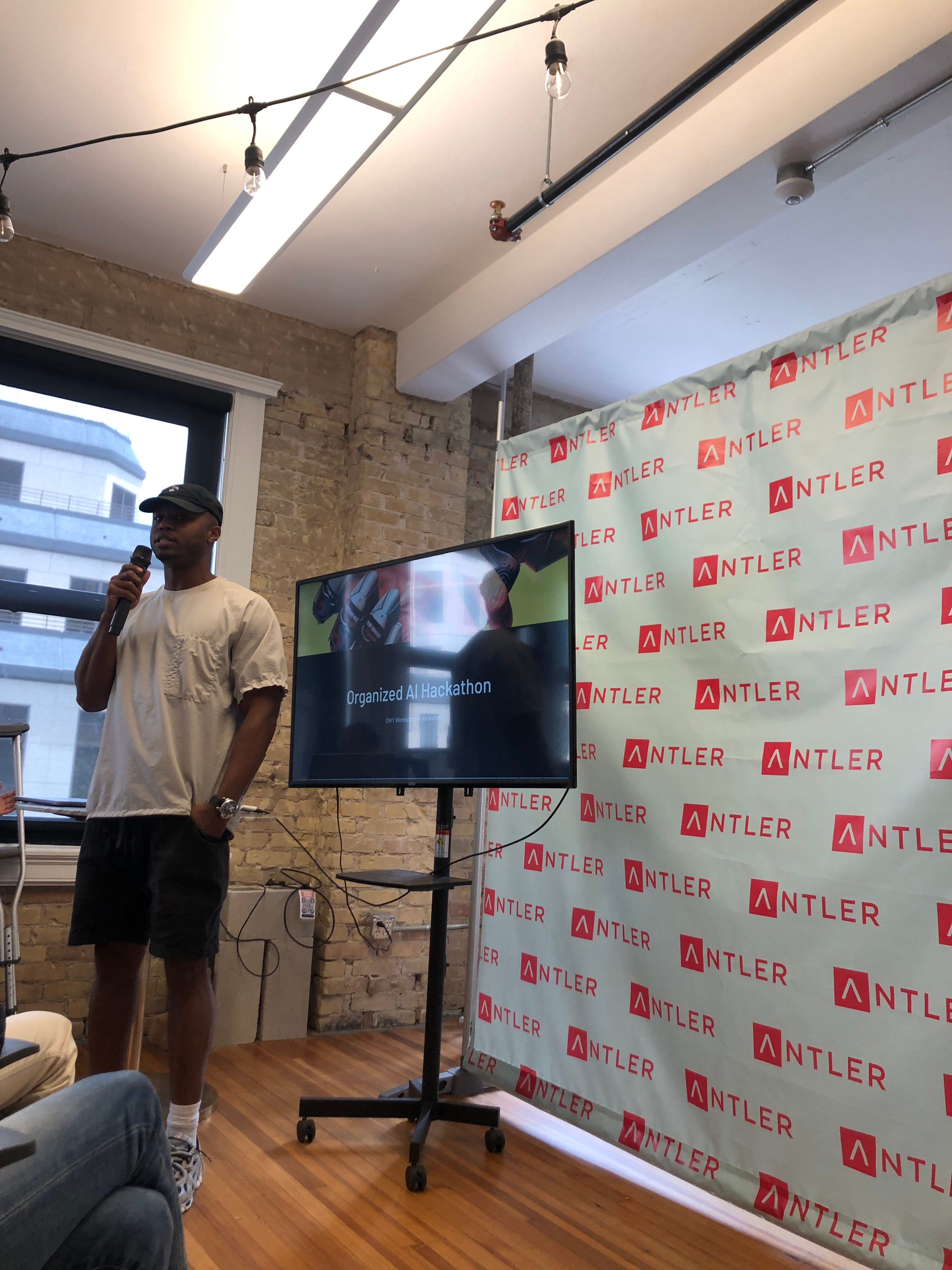
Then it was time to get down to business and vibe it out, coding-style. An engineer who makes more money in an hour than I’ve made all month showed me how to download all the tools and apps we would use to create what we wanted to vibe code, then said “there ya go.”
I sat there, dumbfounded for a minute.Were they not going to give us a presentation on how to vibe code? Was there a handbook I could read before starting? Was I supposed the ask the vibe coding tool how to vibe code?
Then I had an idea. Using prompt frameworks I learned in previous LLM workshops, I used the prompt sidebar in Cursor, the app we were using to vibe code, to slowly build a website that was designed to be an all-in-one hub for content reproduction and content strategy.
Hacking my way into vibe coding
Day One of the hackathon involved me trying, and failing, to get the website I built to launch. I had to re-do the process several times, quickly learning that “a lot of vibe-coding is vibe-debugging,” reminded one of the leaders of the workshop while we were hours deep into our attempts to code.
I showed up on Day Two determined to launch and demo what I’d built. There was a $1,500 prize for the best app, but most of the other coders in contention were real engineers who were working in teams.
The app I built was designed to help small businesses and creatives implement the COPE strategy (Create Once, Publish Everywhere), which was the brainchild of NPR back in the 2000s.


[A few screenshots of the demo version]
At the end of the 48-hr hackathon, I presented my demo to the other vibe coders and the judges, who were impressed with my design and the fact that I had zero coding experience going in. I did not win 1st, 2nd, or 3rd place, but I did get an Honorable Mention from the judges, which felt like placing just off the podium at the Olympics.
Risks and dangers of vibe coding
There are now a variety of vibe coding tools on the market, ranging from the super beginner-friendly (like Lovable) to the more advanced (like Claude Code, which was built for developers).
Vibe coding a website or app from scratch sounds great, but there are several risks, including security, data breaches, flawed code, and hallucinations. Building a shopping app with AI could make you more vulnerable to hackers, which is really going to cost you in the long run, especially if your site accepts payments from users. You also might have to constantly deal with bugs and keeping your web/mobile app up and running.
When I was vibe coding my own site during the hackathon, I had to frequently re-do my design, delete features that worked at first and then crashed, and go into the html code and read it line-by-line to see what the error might be. Even websites and platforms built the old-fashioned way, without an LLM, experience these problems.
If you build it, will they come?
In theory, it’s never been easier to learn how to code. But it’s also never been harder to create a website or app that achieves product-market fit. Building something is the easy part: finding people who want to buy or use what you built is the real challenge.
If you’re curious about vibe coding, I suggest attending a hack night or check out AI Tinkerers, which has events and local chapters in cities across the U.S. and internationally. Friends don’t let friends vibe code alone.
I can code but I hate it. it just is so painful for my brain. however, I have been wondering if vibe coding would help because the thing that is the most painful to me is all is all the diff languages needed to do nearly anything real. it's in python but you need java script for this and html for that and on and on.
I am glad you mentioned hackathons for vibe coding. that feels like a push that would help me try this out in a fun environment. thanks
I can code but I hate it. it just is so painful for my brain. however, I have been wondering if vibe coding would help because the thing that is the most painful to me is all is all the diff languages needed to do nearly anything real. it's in python but you need java script for this and html for that and on and on.
I am glad you mentioned hackathons for vibe coding. that feels like a push that would help me try this out in a fun environment. thanks